在第二季度结束时,Mining.com在全球最有价值的矿工中排名前50*,总计市值略低于1.50万亿美元,到目前为止,迄今为止的2130亿美元在2025年上涨了2130亿美元。
但是,三年前,世界上最大的矿业公司的股票市场估值仍低于历史最高水平的2500亿美元。尽管在过去三个月中,尽管新的多年高点和创纪录的主要金属价格,但前50名也再次表现不佳。
罕见事件
自从前50名以来,中国北部稀土一直是该行业围绕该行业的17个要素的唯一生产国,因为中国的控制力紧缩,稀土成为地缘政治热马铃薯。
在第1季度结束时,这些页面推测没有明显的REE候选人可以在短时间内加入前50名。与五角大楼达成了一项突破性的协议,以证明投资者是错误的,并重新订购了一个行业,尽管其备受瞩目的上限很少。
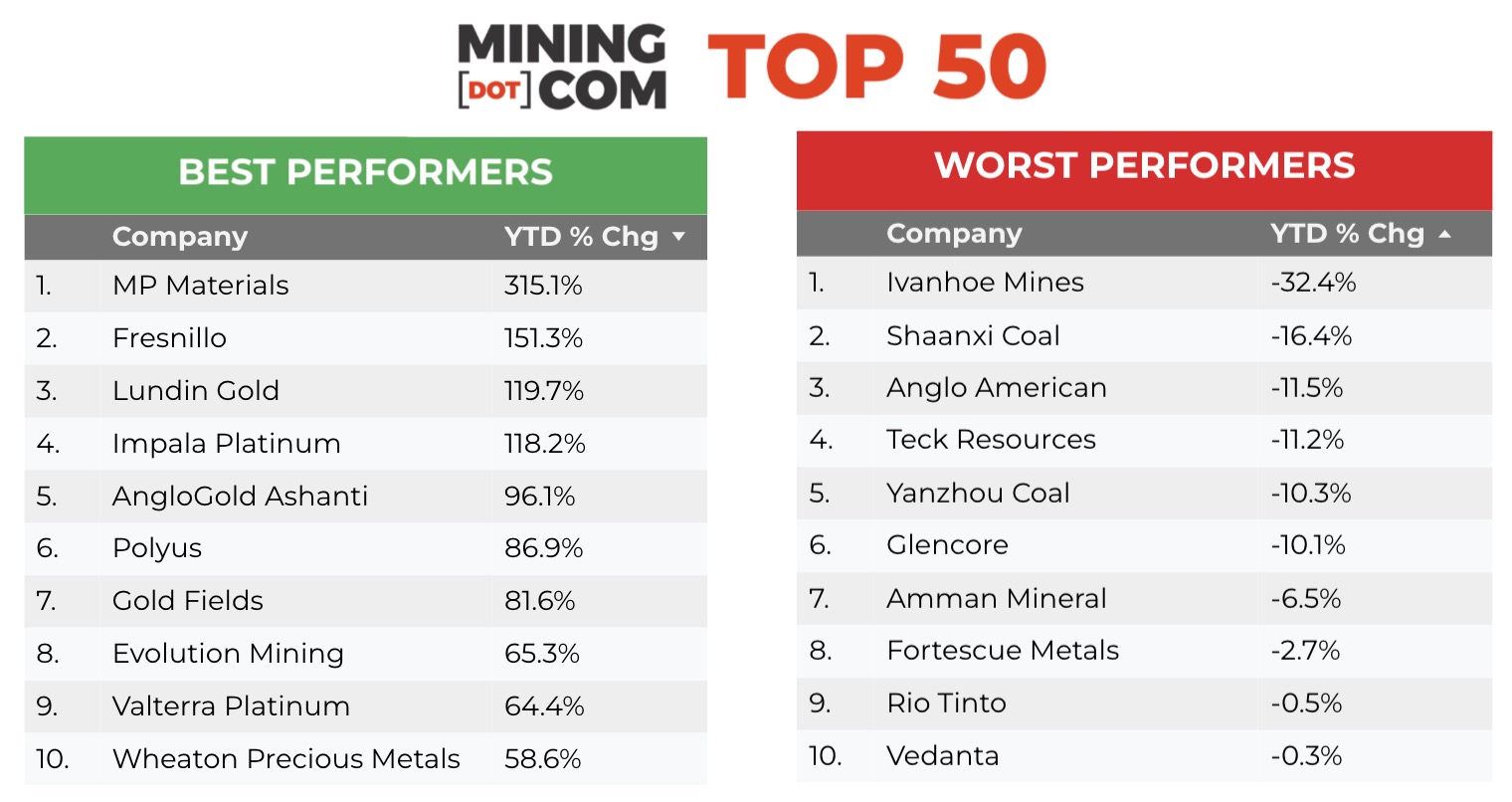
在加利福尼亚州经营Mountain Pass矿山的MP材料现在迄今为止的价值增长了三倍,总部位于拉斯维加斯的首次亮相的位置为40,其估值为110亿美元。柜台确实在2022年3月关闭,但是整个采矿业当时都在驾驶高处,入场券意味着它落在排名之外。
虽然MP材料DOD交易无疑是美国稀土景观的改变游戏规则,但仍有多少仍在遭受中国对磁铁材料的沮丧定价的行业的过滤量是有争议的。
澳大利亚的琳纳斯稀土过去已经接近,今年的估值为61亿美元,但鉴于稀有地球采矿相对较小的整体规模(在单一数十亿美元中,MP材料和中国北部稀土)可能会在可预见的未来中拥有自己的领域。
锂提升
在Zangge Mining(由Zijin Mining控制的Zangge Mining舒适地占据4号)之后,Lithium在排名中的代表将再次增加。
这使锂股充满了一些生命,自2022年达到顶峰以来,锂股票已被淘汰,排名中有六个股票。那些日子早已一去不复返了,但是中国的甘芬锂确实设法重新加入了智利的SQM。
Albemarle只是错过了削减,现在以91亿美元的估值为第51家最有价值的采矿公司,但是澳大利亚矿业资源和Pilbara Minerals等澳大利亚生产商也有很长的路线,而另一个前成员,即中国的Tianqi也是如此。
其他生产商遵循Zangge的举动,毕竟是地方政府的要求,尚待确定,但是EV电池锂的残酷经济学意味着中国以外的生产商中的鸡肉游戏必须进入其最终局。
尽管最近发生了闪烁,但锂价格下跌造成的价值破坏引起了人们的眼神。该指数中的锂股票在2022年第二季度达到顶峰,总价值接近1,200亿美元 – 现在,剩下的两个柜台几乎没有达到200亿美元。
更珍贵
毫不奇怪,珍贵的金属反击在表现最好的名单中占据主导地位,并构成了大多数新进入者。在长时间缺席后,Impala Platinum在跳跃16个位置加入了唯一的其他PGM代表Valterra(以前是盎格鲁白金)之后,以50号恢复了排名第50名,本身在2025年迄今已获得9个位置。
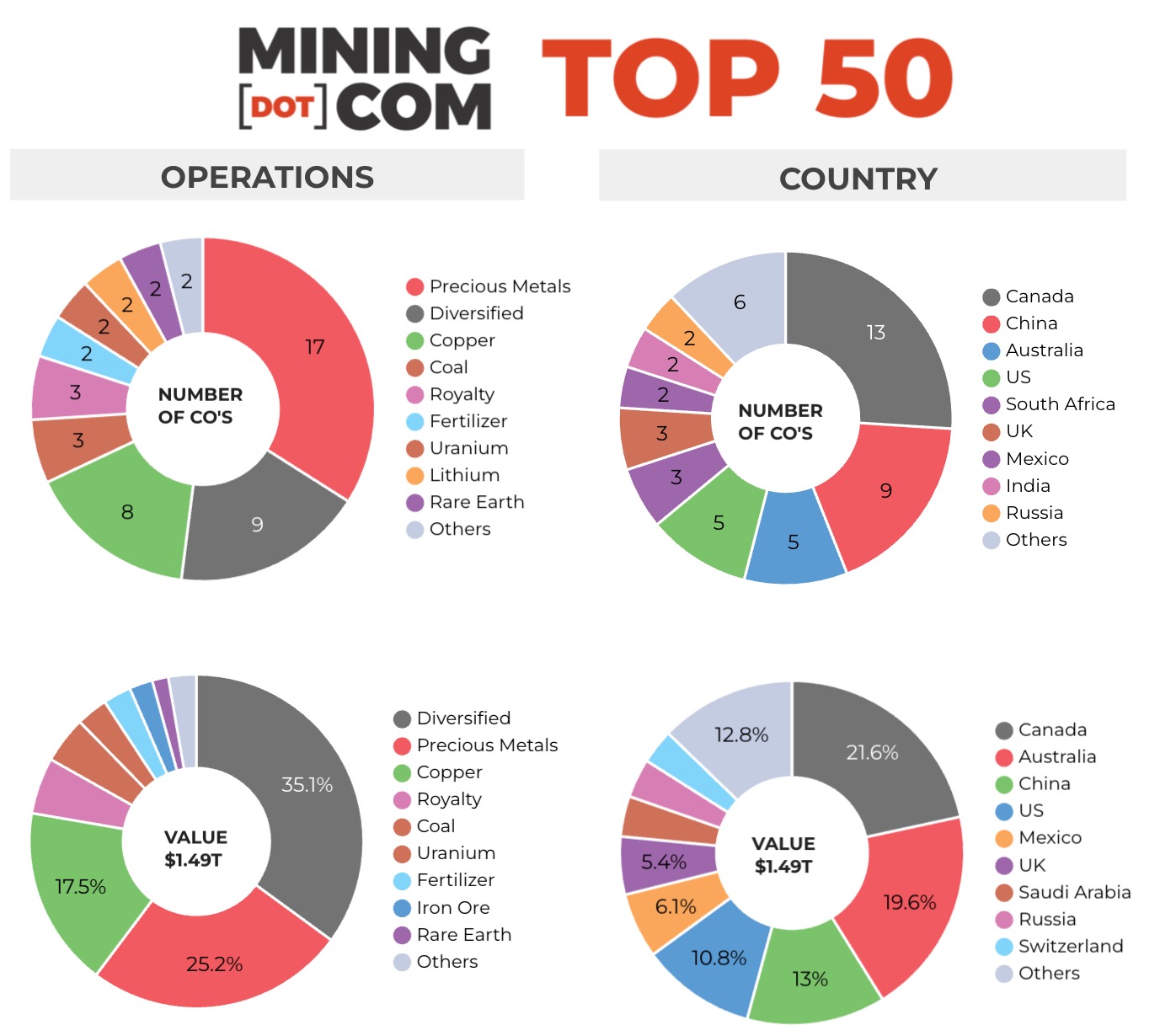
现在,黄金,银和PGM矿工以及特许权使用费占前50名价值的31%,高于年初的24%。就总部设在那里的矿工的价值而言,贵金属的实力也首次超过了澳大利亚。
在该指数中的22%,加拿大公司的总体价值为3200亿加元,而现在的五家澳大利亚公司为2.93亿美元,今年首次将总部位于悉尼的黄金股票演化挖掘的澳大利亚公司纳入其中。
自本世纪之交以来,总部位于墨尔本的必和必拓(BHP)和里约·廷托(Rio Tinto)的目前形式一直是全球两支矿业股票,今天价值2340亿美元。
老警卫
对于第二季度快照,排名最低的入场券现在必须从去年年底不到70亿美元的价格为90亿美元,随着旧后卫继续表现不佳,该指数提供了一些支持。
Mining的传统巨头 – 必和必拓,里约热内卢,嘉能尔,瓦尔和盎格鲁美国人 – 追溯了他们的根源数十年,甚至超过一个世纪,在2024年被击倒,在一年中损失了1.20亿美元的集体。今年到目前为止,该集团的投资者已经看到了这些计数器的收回,只有1%的损失。
过去,这些公司除了摇摆不定,因为中国超级循环只是一个周期,始终占据了排名前五名,并得到了庞大的资产组合,涵盖了许多地区的一系列商品。
现在,大型多元化股票(现在是矿业现在的MAG 7版本)的总指数不到24%,低于2022年底的38%的高度。
多元化和广泛的金属投资组合不是过去的票,第二季度的长期居住者首次退出。
瑞典的Boliden经营着欧洲最大的铜矿,可以在其其他碱金属运营中充分利用PGM信用,跟随另一个欧洲坚定的坚定者(波兰铜生产商KGHM),证明尽管甲壳机的光明前景,投资者还是很挑剔。
KGHM在2024年底辍学,现在在60年代中期疲惫不堪,一年远远落后于South32,这是一位基地和次要的金属专家,自十年前被剥离出来以来,该专家就在第1季度结束后退出。
NOTES:
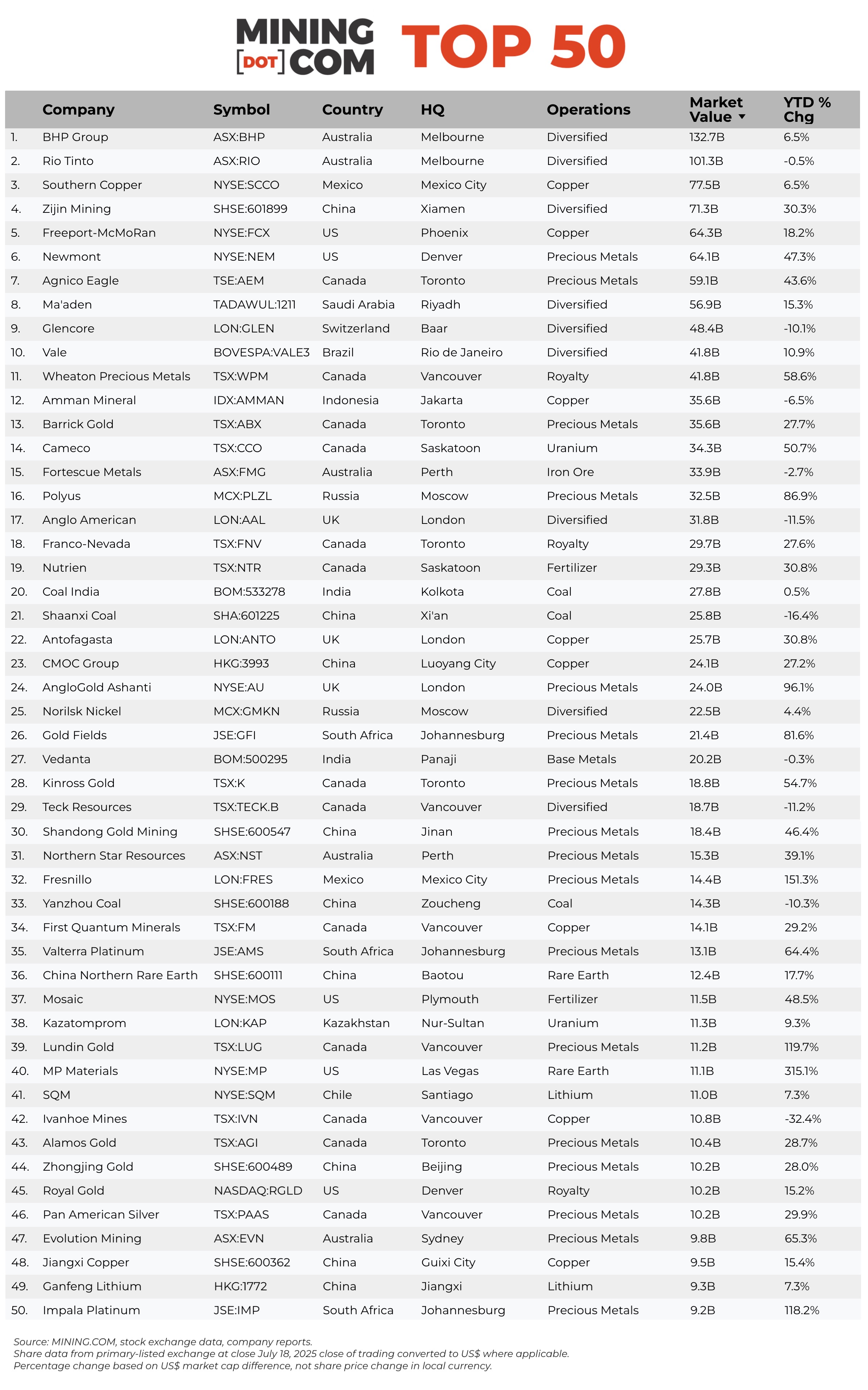
Source: MINING.COM, stock exchange data, company reports. Share data from primary-listed exchange at close July 18, 2025 close of trading converted to US$ where applicable. Percentage change based on US$ market cap difference, not share price change in local currency.
As with any ranking, criteria for inclusion are contentious. We decided to exclude unlisted and state-owned enterprises at the outset due to a lack of information. That, of course, excludes giants like Chile’s Codelco, Uzbekistan’s Navoi Mining (the gold and uranium giant may list later this year), Eurochem, a major potash firm, and a number of entities in China and developing countries around the world.
Another central criterion was the depth of involvement in the industry, and how far upstream is the bulk of its revenue, before an enterprise can rightfully be called a mining company.
For instance, should smelter companies or commodity traders that own minority stakes in mining assets be included, especially if these investments have no operational component or even warrant a seat on the board?
This is a common structure in Asia and excluding these types of companies removed well-known names like Japan’s Marubeni and Mitsui, Korea Zinc and Chile’s Copec.
Levels of operational or strategic involvement and size of shareholding were other central considerations. Do streaming and royalty companies that receive metals from mining operations without shareholding qualify or are they just specialised financing vehicles? We included Franco Nevada, Royal Gold and Wheaton Precious Metals on the basis of their deep involvement in the industry.
Vertically integrated concerns like Alcoa and energy companies such as Shenhua Energy or Bayan Resources where power, ports and railways make up a large portion of revenues pose a problem. The revenue mix also tends to change alongside volatile coal prices. Same goes for battery makers like China’s CATL which is increasingly moving upstream, but where mining will continue to represent a small portion of its valuation.
Another consideration is diversified companies such as Anglo American with separately listed majority-owned subsidiaries. We’ve included Angloplat in the ranking but excluded Kumba Iron Ore in which Anglo has a 70% stake to avoid double counting. Similarly we excluded Hindustan Zinc which is listed separately but majority owned by Vedanta.
With other groups like Mexico’s Penoles where refining and chemicals make up a substantial part of the business where possible the Top 50 would include separately listed operating subsidiaries that are dedicated to mining. This is also why Southern Copper represents Grupo Mexico in the ranking.
Many steelmakers own and often operate iron ore and other metal mines, but in the interest of balance and diversity we excluded the steel industry, and with that many companies that have substantial mining assets including giants like ArcelorMittal, Magnitogorsk, Ternium, Baosteel and many others.
Head office refers to operational headquarters wherever applicable, for example BHP and Rio Tinto are shown as Melbourne, Australia, but Antofagasta is the exception that proves the rule. We consider the company’s HQ to be in London, where it has been listed since the late 1800s.
Please let us know of any errors, omissions, deletions or additions to the ranking or suggest a different methodology: email Frik Els at (email protected) with Top 50 in the subject line.
更多新闻
当CAML掉下来时,新世界支持Kinterra接管
董事会一致建议股东接受Kinterra的每股0.066美元的提议。
2025年7月21日|下午03:34
{{coscopsity.name}}
{{post.title}}
{{post.excerpt}}
{{post.date}}

评论
找不到评论。